
If you recently parked a new electric vehicle in your driveway, you have likely plugged the portable cable from your trunk into a standard garage outlet. For the first few days, watching the range tick up slowly feels manageable. Then a cold snap hits, your daily commute stretches across the 401, and you realize the battery barely recovered overnight. Choosing between a Level 1 vs Level 2 EV charger comes down to your daily mileage, your home’s electrical infrastructure, and how Southern Ontario winters impact your battery efficiency. Here is an honest, field-tested breakdown to help you decide which setup makes sense for your property.
Level 1 vs. Level 2 Charging: What Actually Separates Them
Before looking at charging speeds or equipment, it helps to understand the physical and electrical differences between these two charging tiers. The difference is not just about a larger plug; it involves how voltage, amperage, and continuous electrical loads interact with your home’s wiring.
Level 1: The Standard 120-Volt Plug
A Level 1 charger operates on a standard 120-volt household receptacle, drawing between 12 and 15 amps of alternating current (AC). Because standard electrical code classifies EV charging as a continuous load (meaning it draws power at maximum capacity for three hours or more), standard rules dictate that it can only draw 80% of a circuit’s rated capacity. On a typical 15-amp household circuit, that means your car draws 12 amps, delivering roughly 1.4 kilowatts (kW) of power to the vehicle.
Level 2: The Dedicated 240-Volt Circuit
A Level 2 charging station runs on a 240-volt circuit, the same voltage used by your electric clothes dryer, stove, or central air conditioner. These units generally operate at an EV charger amperage ranging from 16 amps up to 50 amps on residential systems, delivering anywhere from 3.8 kW to 11.5 kW of power. Under the Ontario Electrical Safety Code (OESC), every Level 2 station requires a dedicated circuit for EV charger use, meaning no other plugs, lights, or appliances can share that wiring.
| Feature | Level 1 Charging | Level 2 Charging |
| Voltage | 120V AC (Standard household) | 240V AC (Dedicated branch circuit) |
| Typical Current Draw | 12 Amps (on a 15A circuit) | 16 to 48 Amps (on a 20A to 60A circuit) |
| Power Output | ~1.3 kW to 1.4 kW | ~3.8 kW to 11.5 kW |
| Installation Requirements | Standard grounded wall outlet | Hardwired or NEMA 14-50 / 6-50 receptacle |
| New Circuit / ESA Permit Required? | Yes, if a new or upgraded outlet/circuit is installed; not required if an existing code-compliant outlet is reused | Yes, ESA permit and inspection required |
Once you understand the electrical fundamentals, the immediate follow-up question is how those kilowatt figures translate to your day-to-day routine.
How Fast Is Fast Enough? Real Charging Times for Toronto Drivers
Understanding how long to charge EV at home depends on two variables: your battery size and the ambient temperature. What works on a mild May afternoon in North York performs very differently during a freezing February morning in Markham.
Level 1 charging generally restores about 5 to 8 kilometers of range per hour of charging. If you plug in at 7:00 PM and leave at 7:00 AM, you recover approximately 60 to 90 kilometers. For short neighborhood errands or plug-in hybrid electric vehicles (PHEVs) with small 10–15 kWh batteries, this overnight recovery works reliably.
For full battery-electric vehicles (BEVs) with 60 to 100 kWh battery packs, Level 1 takes roughly 43 to 71 hours to complete a full recharge from near empty, often spanning two to three full days.
Level 2 charging changes the equation significantly. A typical 32-amp or 40-amp Level 2 unit adds roughly 40 to 60 kilometers of driving range per hour. That means an empty 75 kWh battery is completely replenished in about 8 to 10 hours, allowing you to take advantage of Toronto Hydro’s overnight ultra-low overnight (ULO) or off-peak electricity rates with ease.
“In sub-zero GTA weather, a cold battery pack consumes part of a 120-volt Level 1 trickle charge just to warm itself up before taking on actual driving range. Level 2 delivers the amperage needed to both condition the battery and achieve a full charge overnight.”
Seasonal temperature drops can reduce EV range by 20% to 40% due to cabin heating and reduced chemical reaction speeds inside battery cells. Factoring that winter efficiency loss into your daily commute is often the turning point for deciding whether Level 1 is genuinely fast enough.
Is Your Home’s Electrical Panel Ready for Either Option?
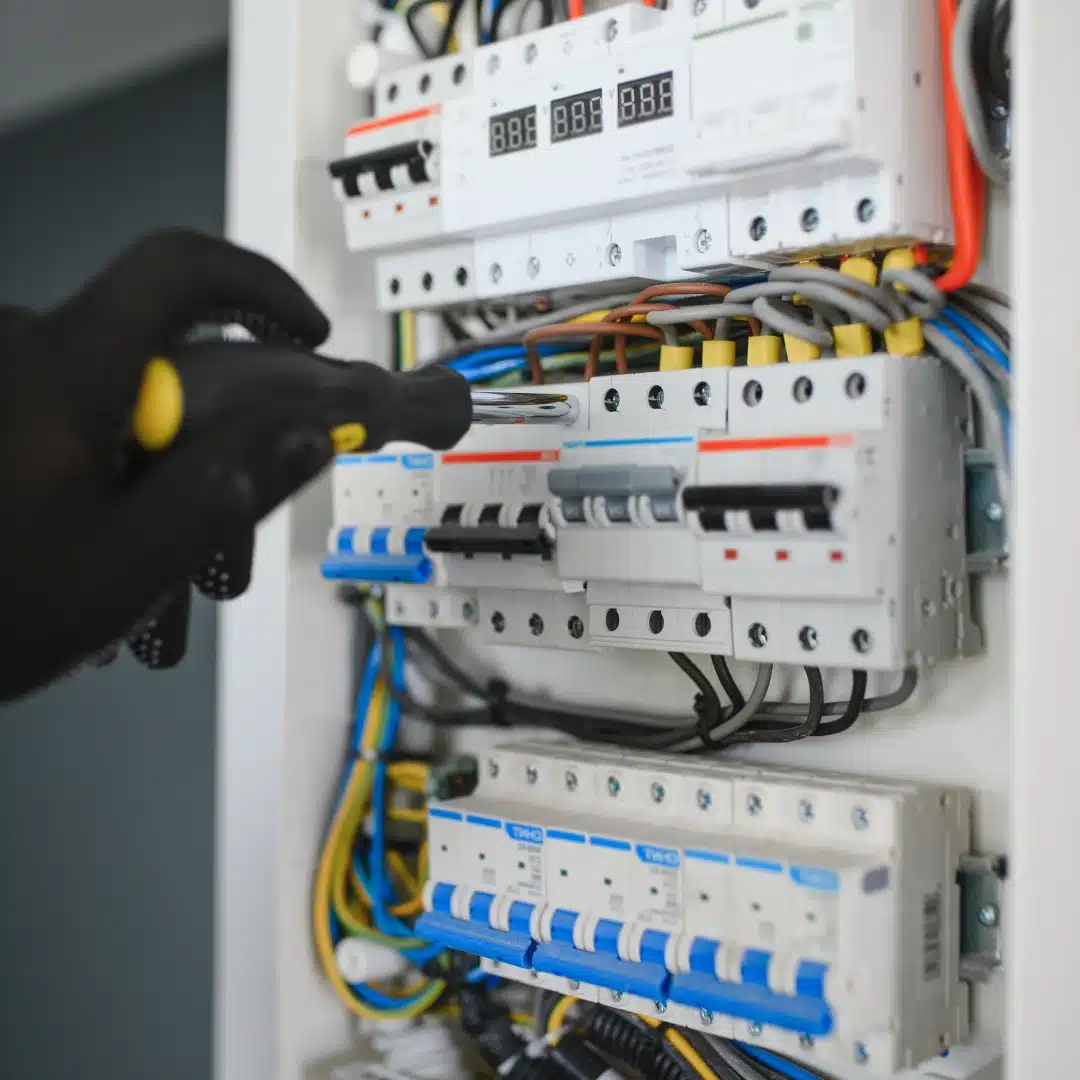
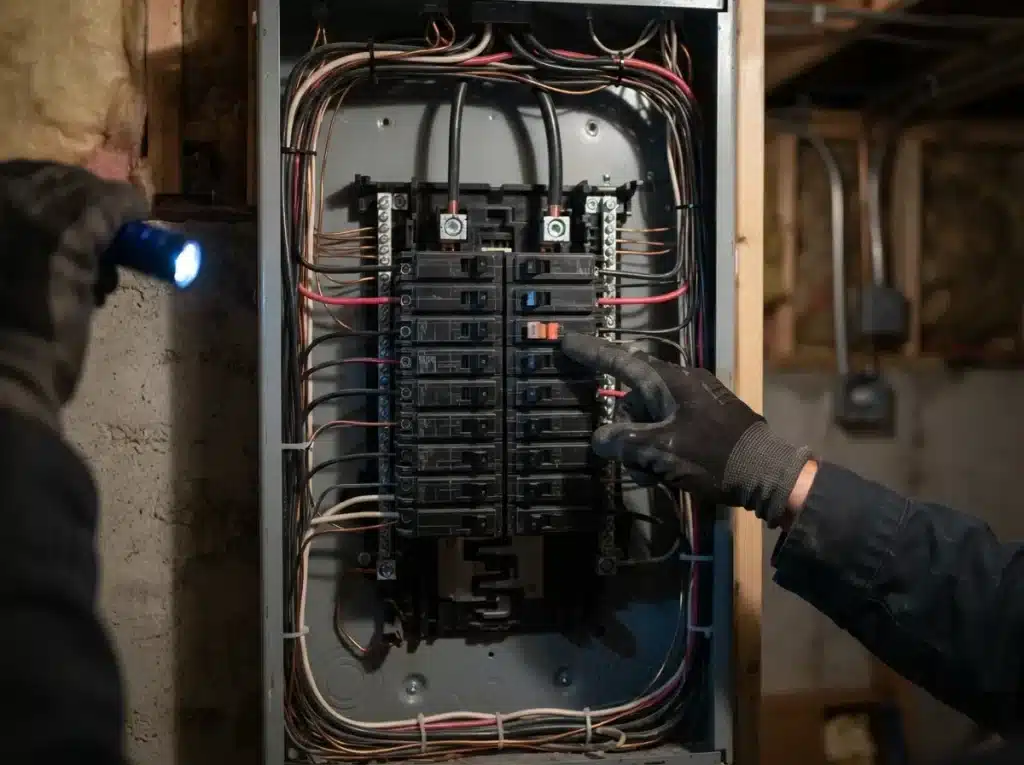
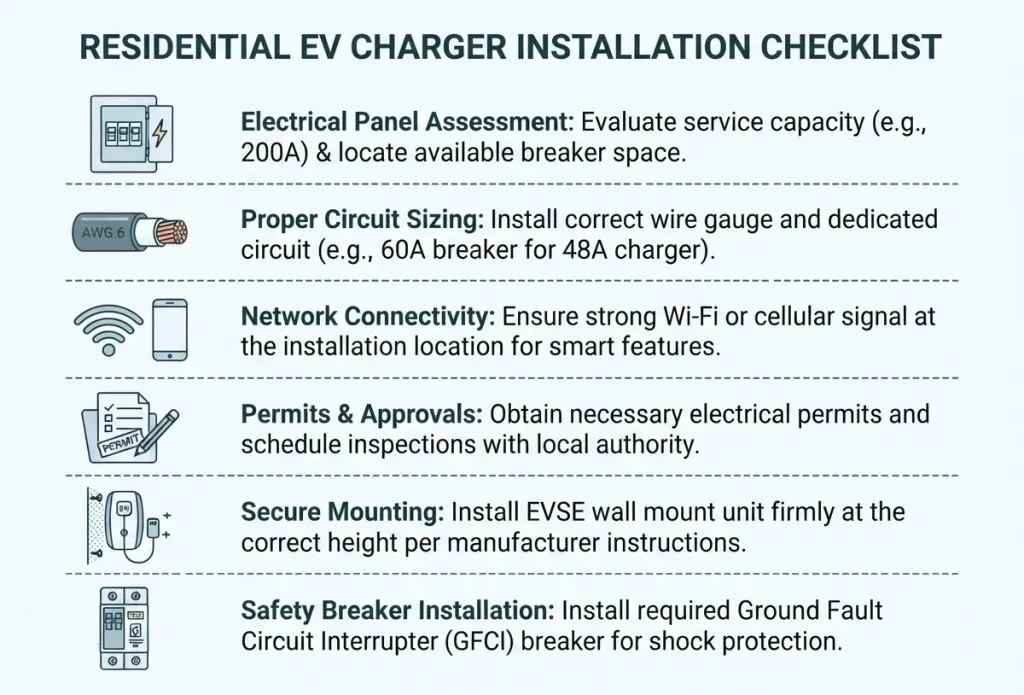
Before deciding on equipment, you must confirm what your home’s electrical distribution system can physically support. Adding a significant continuous electrical load requires checking your 240V EV charger panel requirements against current safety standards.
Service Capacity: 100-Amp vs. 200-Amp Services
Many post-1980s homes in Richmond Hill and Markham have 200-amp electrical panels that easily accommodate a double-pole 40A or 50A breaker for Level 2 charging. However, older detached homes and bungalows across midtown Toronto, North York, and East York frequently operate on original 100-amp services.
If your 100-amp service already powers an electric range, clothes dryer, central AC, or an electric water heater, adding a 40-amp continuous EV load may push the panel past its calculated limit under OESC Section 8 (Circuit Loading and Demand Factors). In those cases, you may require an electrical panel upgrade to 200 amps or an approved energy management device (smart load-shedding switch) to avoid overloading the service.
| Panel Profile | Typical Situation | Level 2 Outlook |
| 100-Amp Service | Heavy gas appliances (gas furnace, gas stove, gas water heater) | Usually has capacity for a 24A–32A Level 2 charger |
| 200-Amp Service | Mixed or electric appliances | Readily accommodates a 32A–48A Level 2 breaker |
| 100-Amp Service | All-electric appliances (electric range, dryer, water heater, AC) | Usually requires a panel upgrade or an approved energy management device (EVEMS) |
Physical Space and Breaker Availability
Even if your service size has calculated capacity remaining, your panel must have physical space for a dedicated two-pole 240-volt breaker. Tandem (cheater) breakers are not permitted in all panel types or slots under CSA regulations.
Permitting and Code Compliance
In Ontario, installing any new or modified electrical circuit, including a new 120-volt outlet or a 240-volt Level 2 circuit, requires an electrical permit filed with the Electrical Safety Authority (ESA). A licensed electrical contractor must pull this permit before starting work, and the ESA issues a Certificate of Acceptance once the installation passes inspection. This certificate confirms code compliance and protects your home insurance coverage. Reusing an existing, code-compliant outlet for Level 1 charging does not require a new permit, but adding or modifying any circuit does.
Knowing your panel’s capacity prevents surprises before you start pricing out hardware and installation work.
Cost Comparison: What Each Option Really Involves
Evaluating the financial side requires comparing immediate out-of-pocket setup expenses with long-term operating practicalities.
Level 1 charging carries virtually no upfront equipment cost if your vehicle came with a factory mobile charging cord and you already have a functional, grounded outlet near your parking spot. If you must add an outdoor GFCI outlet near your driveway, you are looking at the modest cost of a standard 120-volt branch circuit installation, plus the associated ESA permit.
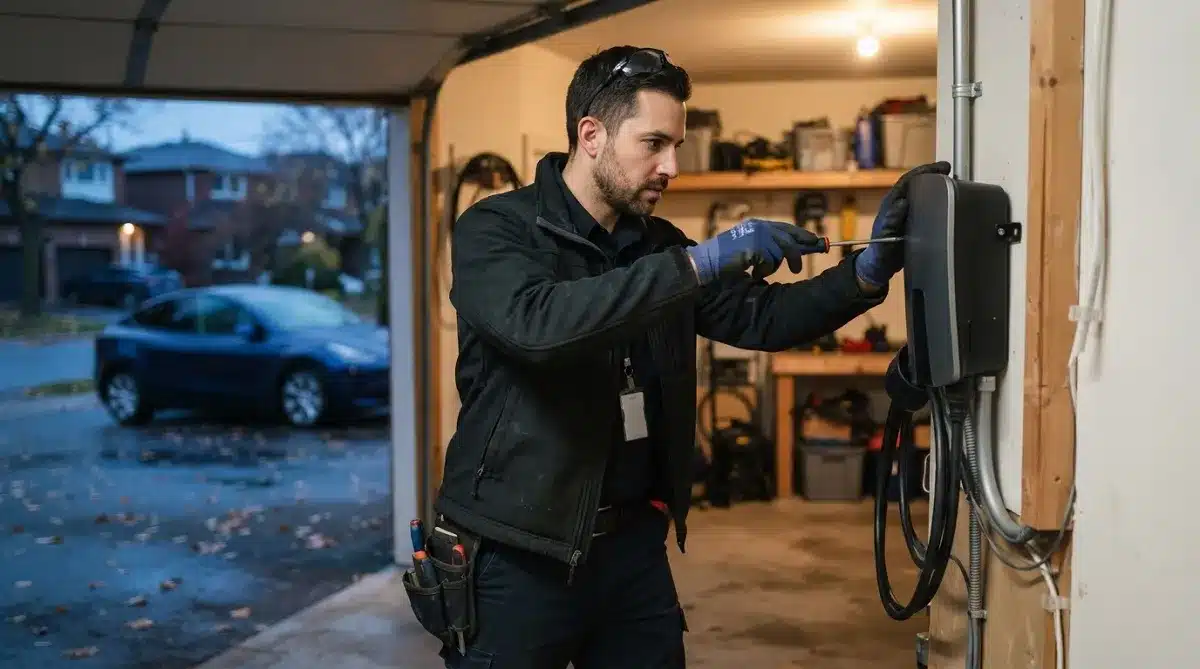
A Level 2 charger installation cost involves two distinct components: the charging station hardware (the EVSE) and the professional installation work.
Charging Hardware (EVSE): Purchasing a certified unit from reputable manufacturers (such as ChargePoint, Flo, Grizzl-E, or Tesla) generally costs between $500 and $1,000 depending on smart features, cable length, and weather ratings.
Electrical Installation: Professional installation costs vary based on the distance from your panel to the parking spot, whether the wire path requires drywall patching or trenching, and whether panel modifications are required. A simple installation adjacent to the main panel is straightforward; a run across a finished basement to a detached garage requires more labor and materials.
While Level 2 involves an upfront investment, it allows you to concentrate charging into the cheapest off-peak electrical windows, lowering your ongoing electricity costs over time.
When Level 1 Is Genuinely Fine, and When It Isn’t
Level 1 charging gets an unnecessarily bad reputation, but it is a fully viable solution for a specific group of drivers.
Level 1 works reliably if:
- Your daily round-trip commute is consistently under 40 to 50 kilometers.
- You drive a plug-in hybrid (PHEV) with a small battery pack that tops up in under 8 hours.
- Your vehicle is parked indoors in a heated or insulated garage where winter temperatures do not sap charging efficiency.
- You have reliable, low-cost charging available at your workplace or nearby public hubs to supplement home charging.
Level 1 becomes problematic when:
- You drive more than 70 kilometers daily across the GTA and arrive home with a depleted battery on consecutive days.
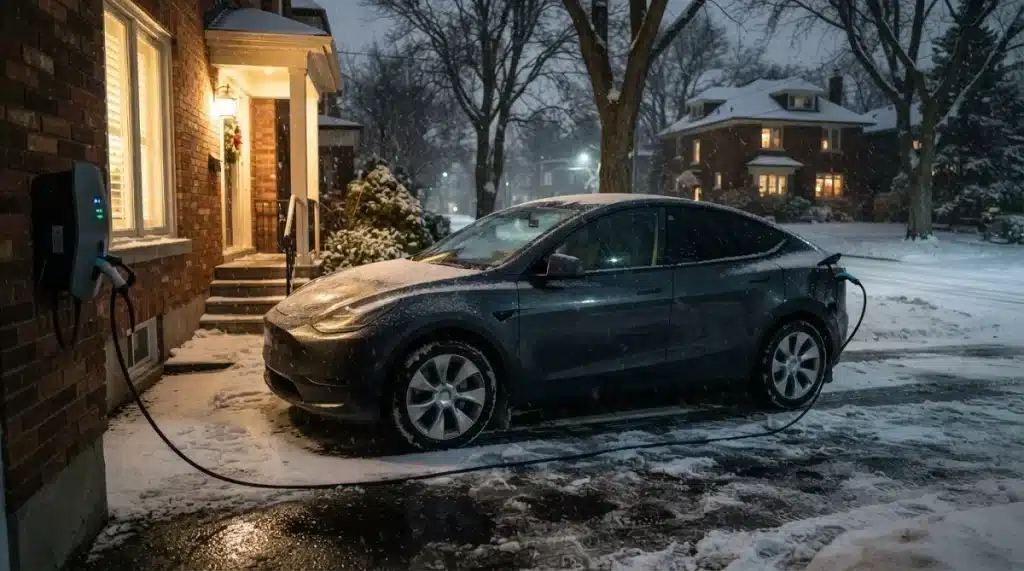
- Your vehicle is parked outside during sub-zero Canadian winter conditions.
- You share one charging outlet between two electric vehicles in the same household.
- You rely on spontaneous weekend road trips and need your battery fully replenished on short notice.
If your lifestyle fits the second list, sticking with a 120V trickle charge usually creates daily friction that a dedicated 240V setup eliminates.
Signs You Should Upgrade to Level 2 Now, Not Later
Many homeowners attempt to get by on Level 1 charging, only to run into safety issues or daily inconveniences that force a mid-winter upgrade.
- Warm Outlets or Tripping Breakers: If the wall outlet, faceplate, or charging cord feels noticeably hot to the touch after several hours, or if the breaker trips when another garage device turns on, the circuit is overburdened. Standard convenience outlets were never engineered for continuous 12-hour high-amperage draws.
- Persistent Range Deficits: You wake up on consecutive weekdays with less range than you started with the day before, slowly draining your overall battery reserve by Friday evening.
- Missing Off-Peak Utility Rates: Because Level 1 takes 20+ hours to charge, you are forced to pull electricity during mid-peak and on-peak hours, increasing your monthly hydro bill.
- Winter Range Drops: Sub-zero temperatures arrive, and your daily commute starts consuming up to 40% more battery, outstripping your Level 1 overnight recovery rate entirely.
Addressing these indicators early prevents premature wear on your home’s standard wiring and eliminates daily range anxiety.
Condo, Townhouse, or Detached House: Does It Change the Answer?
Your physical home type plays a substantial role in determining which charging solution is feasible. An EV charger for condo vs house setup presents entirely different technical and administrative considerations.
| Detached House | Townhouse | Condominium |
| Full panel control | Conduit routing through shared walls / garages | Condo board approval under O. Reg. 48/01 |
| Short, direct wiring runs | Panel load balancing may be needed | EVEMS and sub-metering typically required |
| Simple ESA permitting | ESA sub-panel checks | Shared infrastructure planning |
Detached Single-Family Homes
Detached homes offer the most straightforward path. You have direct control over your electrical panel, clear routing options to the garage or exterior wall, and no administrative approval requirements beyond a standard ESA permit.
Townhomes
Townhouses often have the electrical panel in the basement at the front or rear of the home, requiring longer conduit runs through finished ceilings to reach a garage or outdoor parking pad. If your townhouse is part of a common-elements condominium corporation, you will need to review corporate bylaws regarding exterior wall penetrations.
Condominiums
In an Ontario condominium, charging infrastructure is governed by Sections 24.3 to 24.6 of Ontario Regulation 48/01, made under the Condominium Act, 1998. Installing a Level 2 charger typically requires submitting an application to your condo board, and, depending on the building’s electrical capacity, may involve using an Electric Vehicle Energy Management System (EVEMS) linked to the building’s bulk electrical supply or a sub-metered panel. Because Level 2 installations in condo parking garages require board approval and shared infrastructure planning, Level 1 trickle charging is rarely permitted on shared common-element garage outlets.
Understanding your building type clarifies both the technical requirements and the administrative steps involved before purchasing equipment.
Choosing Your Next Step
If your daily driving is modest, your car sleeps in a garage, and you drive a PHEV or low-mileage commuter, your included Level 1 cord might serve your needs without spending a dollar on upgrades.
However, if you drive a full-battery EV, park outside through GTA winters, or find yourself running low on range by midweek, installing a dedicated 240V system is the safest and most practical upgrade you can make.
To determine whether your panel has the capacity for a 240-volt circuit without an expensive service change, schedule an electrical assessment with our team. Learn more about our ESA-certified home EV charger installation services or contact Daliran Electric today to review your home’s setup.
Frequently Asked Questions
Can I plug a Level 1 charger into any regular outdoor outlet?
You can plug into any standard 120V household outlet, provided it is a grounded, code-compliant receptacle in good physical condition. For outdoor locations, the OESC mandates an approved Ground Fault Circuit Interrupter (GFCI) outlet housed in a weatherproof “in-use” cover. Avoid using household extension cords, as they introduce resistance, create voltage drops, and pose a real fire hazard under continuous EV charging loads.
Do I need a 200-amp panel to install a Level 2 charger in Toronto?
Not necessarily. While a 200-amp service provides the easiest path, many 100-amp homes can support a 24-amp or 32-amp Level 2 charger if their other major appliances (such as the furnace, water heater, and stove) run on natural gas. If your panel is near capacity, an electrician can install an ESA-approved load-shedding device (EVEMS) that automatically pauses EV charging if your home’s total demand approaches panel limits.
What is the best home EV charger for Canadian winters?
The best home EV charger Canada drivers can choose is one certified by CSA or cUL for cold-weather operation, featuring an outdoor-rated NEMA 4 or 4X enclosure and a heavy-duty cable that remains flexible at -40°C. Look for hardwired models or robust NEMA 14-50 units that allow adjustable amperage settings to suit your panel capacity.