
Residential Electrical Services Cost is one of the most important considerations for GTA homeowners and business owners planning safe, high-quality, and budget-friendly electrical upgrades.
This guide distills the most important insights from Daliran Electric’s 2025 pricing overview—empowering you to plan smart, avoid hidden fees, and select the right professional for your needs.
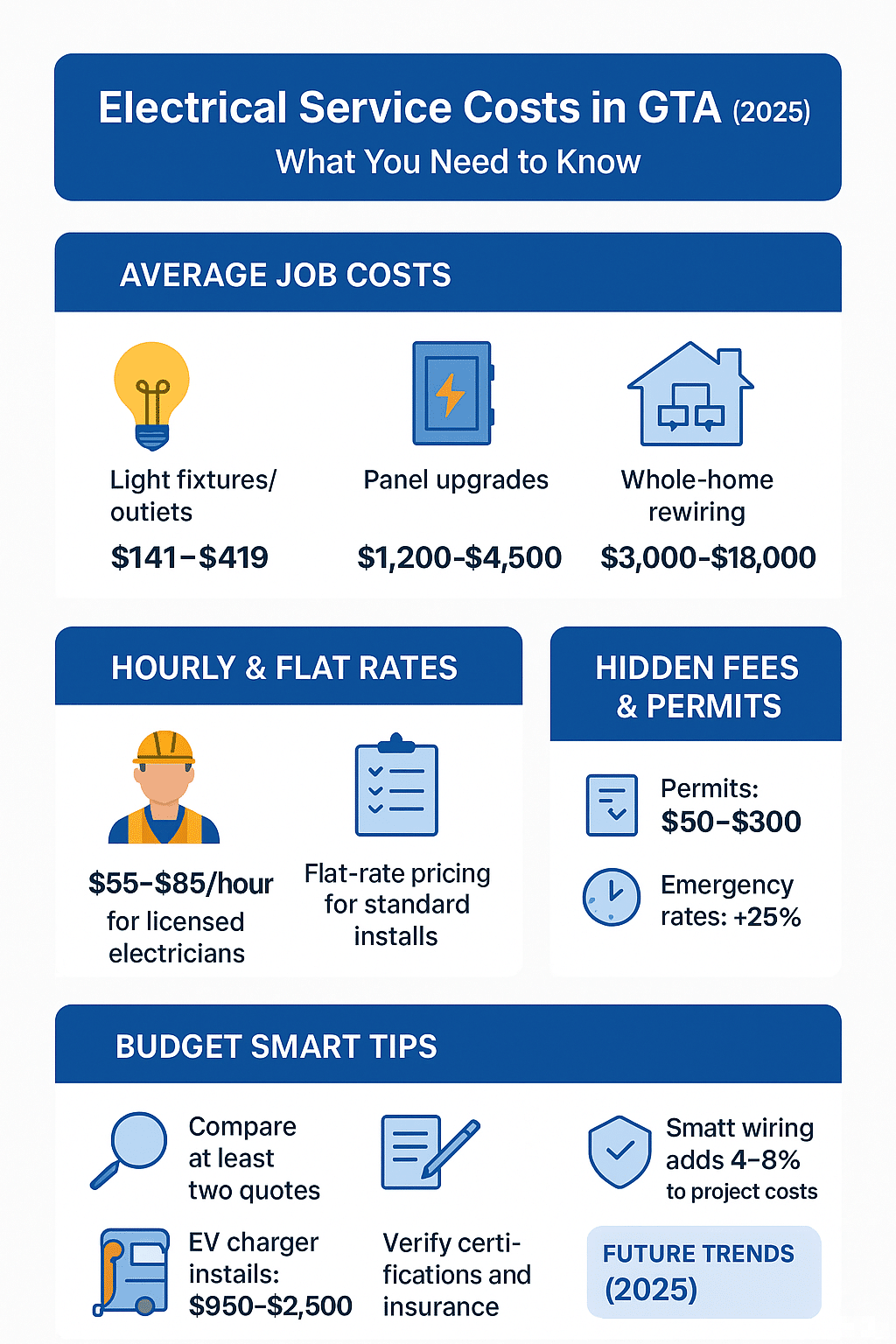
- Typical electrical jobs in 2025 cost $141–$419 for light fixtures or outlets, while panel upgrades and whole-home rewiring range from $1,200 to $18,000—job size and complexity drive final pricing.
- Certified, licensed electricians in the GTA charge $55–$85/hour—premium rates reflect experience, safety, and code compliance you can rely on.
- Flat-rate pricing brings budgeting peace of mind for standard installs; hourly rates suit complex or unpredictable jobs with higher potential for surprises.
- Written, detailed estimates are your shield—demand clear breakdowns of labor, materials, and permits to prevent surprise costs.
- Emergency or after-hours service adds 25–100% premiums over regular calls—budget extra for evenings, weekends, and holidays to avoid disruptions.
- Major upgrades require $50–$300 in permit/inspection fees—compliance protects your insurance, resale value, and family’s safety.
- Always compare at least two quotes from insured, certified pros—beware of “lowball” offers, vague pricing, or requests for cash payments.
- 2025 will see a 4–8% rise in material and labor costs, especially for smart home wiring and EV charger installs—plan ahead and ask about future-proof solutions.
Make informed decisions by expecting transparency, prioritizing credentials, and requesting clear written estimates—get the safe, reliable results your home deserves by reading the full guide.
Introduction
Ever opened your electricity bill only to find a surprise—then wondered if your home’s wiring could be doing more to keep you safe, efficient, and future-ready?
For thousands of GTA homeowners and small businesses, reliable electrical work isn’t just a cost—it’s an investment in safety, value, and peace of mind. Yet, with 2025 bringing rising material prices and new code updates, understanding where your money goes has never mattered more.
Hiring the right electrician comes with questions:
- How much should you really expect to pay for a panel upgrade or a simple outlet replacement?
- Which cost factors put your project at the low or high end of the price range?
- What should you look for in a service estimate to avoid hidden fees or unsafe shortcuts?
This guide puts clarity and confidence in your hands:
- See up-to-date price ranges for 2025’s most common residential electrical jobs
- Unpack the real drivers behind service costs—from labor and materials to permits and compliance
- Decode pricing models so you know when flat-rate or hourly billing works in your favor
- Learn budgeting strategies to handle both routine upgrades and those inevitable surprises in older homes
- Find out how to choose proven, certified professionals who stand behind their work
Transparent quotes and honest communication are non-negotiable when your safety, property value, and insurance coverage are at stake. We’ll show you how to protect your budget—and your peace of mind—without cutting corners on quality or compliance.
Ready to see where the numbers really land in 2025, and what you can do to get the service you deserve?
Here’s what you need to know before your next electrical project gets underway.
Understanding Residential Electrical Service Costs in 2025
Electrical service costs are top-of-mind for GTA homeowners and business owners—especially as reliable, code-compliant work directly impacts your property’s value, safety, and insurance coverage.
With energy savings and market competitiveness becoming greater priorities across the GTA, knowing your real costs and what drives them can save you headaches and unexpected expenses.
What Do Typical Electrical Jobs Cost in 2025?
Today’s most common residential electrical projects in the GTA fall into these cost brackets:
- Light fixture installation or repair: $141–$419
- Outlet/switch installation or replacement: $141–$419
- Ceiling fan installation: $200–$425 (depending on complexity)
- GFCI/AFCI protection upgrades: $200–$350 per circuit
Bigger jobs demand bigger investments:
- 100-amp panel upgrades: $1,200–$1,800
- 200-amp panel upgrades: $1,800–$4,500
- 400-amp upgrades: $8,000–$12,000
- Fuse box to breaker panel conversions: $3,500–$5,500
- Whole-home rewiring: $3,000–$18,000 (home size is critical)
- Running new service from the road: Generally $4,000–$20,000+ (length and underground/overhead lines are major variables)
“A clear, upfront estimate from a certified electrician puts control back in your hands.” It’s a must-have before any major upgrade.
| Service Type | Average Cost (CAD) | Notes |
|---|---|---|
| Light Fixture / Outlet Install | $141–$419 | Standard labor & parts included |
| Ceiling Fan Installation | $200–$425 | Depends on wiring complexity |
| Panel Upgrade (100–200 Amp) | $1,200–$4,500 | Includes permits & inspections |
| Whole-Home Rewiring | $3,000–$18,000 | Cost varies by home size & age |
| Emergency Service (After Hours) | +25–100% Premium | Applies to evenings/weekends |
| Permit / Inspection Fees | $50–$300 | Required for major electrical work |
What Drives Pricing: Core Factors That Matter
Several factors have a direct impact on your final invoice:
- Labor: Electricians charge $55–$85/hour; master electricians may cost more due to expertise.
- Materials: Copper wiring costs up to 3x more than aluminum, but lasts much longer.
- Complexity: Custom lighting, outdated systems, or hard-to-access areas raise costs due to added time and skill.
- Location: Expect slight differences between neighborhoods—travel time and local demand count.
Emergency or after-hours calls often add a premium; picture this: a blown panel on a Sunday night could add $100–$250 to your call-out fee.
“Every home’s electrical system has its own story—hidden issues can mean surprises both good and bad.”
Permits, Compliance, and Hidden Fees: What to Know
- Permits/inspections are required for major electrical work—fees in the GTA usually run $50–$300.
- Legal compliance isn’t optional; it protects your safety, insurance, and home resale value.
Great electricians handle the municipal paperwork so you don’t have to stress.
Overhead, Travel, and Other Indirect Costs
- Operational overhead (insurance, licensing, business costs) gets included in service rates, keeping your provider safe, legal, and available long-term.
- Travel/time for remote or out-of-area calls may result in added fees, especially for one-off or emergency visits.
When choosing your electrician, remember: “Transparent billing, up-to-date credentials, and no-nonsense communication are the foundations of trust.”
Knowing these numbers and cost influencers means you’ll plan smarter—and get the safe, reliable results you deserve every time.
Pricing Models and How They Affect Your Estimate
Knowing how pricing models work can help you budget smarter and avoid unwanted surprises when hiring an electrician.
Hourly Rate vs. Flat-Rate Pricing
Electricians in the GTA use two main approaches: hourly rates and flat-rate quotes. Understanding these can save both time and money.
- Hourly rates (usually $55–$85/hour) are common for jobs with uncertain scopes—think repairs in an older home or troubleshooting complex wiring.
- Flat-rate pricing covers standard jobs, like installing a ceiling fan or adding a new outlet. You’ll get a set price, no matter how long it takes.
“Flat-rate estimates bring peace of mind for homeowners, while hourly rates keep things fair for unpredictable jobs.”
Pros, Cons, and When Each Model Works Best
Choosing the right pricing method depends on your project:
- Hourly rate advantages:
- Transparency if the job requires extra time or troubleshooting
- Fair for work that could uncover hidden issues (ex: replacing old outlets in a 1960s bungalow)
- Flat-rate advantages:
- Predictable, easy-to-budget total cost
- Risk stays with the contractor if the job takes longer than expected
- Flat-rate is ideal for:
- Light fixture installs
- Simple GFCI upgrades
- Panel inspections
- Hourly is best for:
- Whole-home rewiring where complexity varies room-to-room
- Troubleshooting unknown electrical faults
Picture this: You need a new electrical panel. A reputable GTA electrician quotes a flat rate of $1,800 for a 200-amp upgrade, so you know exactly what you’ll pay before work begins.
Structuring Your Estimate for Clarity
Reliable electricians like Daliran Electric aim for transparent estimates and clarity.
- Upfront proposals are provided for most standard jobs, itemizing what’s included.
- For complex work, expect time-and-materials billing—your final cost depends on the hours required and materials used.
“Always ask for a detailed, written estimate so you know exactly what’s included and which items might be billed extra.”
Avoiding Surprises: Comparing and Assessing Estimates
Protect yourself from hidden costs and miscommunication by:
- Reading the estimate carefully: Look for exclusions or fine print.
- Comparing similar scopes: Don’t compare a basic service call to a full panel replacement.
- Asking questions: If something isn’t clear, get clarification in writing.
Memorable takeaway: “A clear estimate today means no surprises tomorrow.”
Understanding these pricing models gives you confidence to plan, compare, and choose the right service—helping you balance value, safety, and budget for every electrical project.
Expert Tips for Budgeting Your Electrical Project
Budgeting for residential electrical work in the GTA starts with understanding the true scope and complexity of your project.
Before you request estimates, make a detailed list of what needs to be addressed—whether it’s a simple outlet repair or a full panel upgrade.
“Picture this: You walk an electrician through your home, pointing out every concern—flickering lights, that outdated fuse box, the need for more outlets in the kitchen.”
The more specifics you provide, the more accurate your quote will be.
How to Get—and Compare—Accurate Quotes
Always request itemized, written quotes from certified, insured electricians.
Examine each quote for:
- Clear breakdown of parts, labour, and permit fees
- Line-by-line descriptions of each task
- The electrician’s credentials and insurance information
Ask the following essential questions:
- Which items are subject to change or unexpected discovery?
- Are inspection and permit costs included upfront?
- What are the timelines for completion and payment terms?
“Never settle for a vague price—transparency ensures safety and cost control.”
Planning for Surprises and Older Homes
In heritage or older homes, hidden electrical issues can appear once work begins—think crumbling insulation or nonstandard wiring.
Plan room in your budget by adding a 10–20% contingency for:
- Concealed damage revealed during repairs
- Upgrades needed for safety or code compliance
- Required permits and inspection costs (typically $50–$300 in the GTA)
“Older homes love surprises—factor that in so your project stays on track, not on pause.”
Routine vs. Emergency Service Costs
Routine calls—like a basic fixture replacement—often cost $141–$419 during regular hours in the GTA.
Need emergency help? Expect a higher call-out fee or surcharges for:
- Evenings and weekends (25–50% extra on average)
- Holidays (sometimes double the standard rate)
- Immediate response times
Visualize this: “The power’s out on a winter night—emergency service answers, but it comes at a premium. Budget for the unexpected.”
Key Advice for Smart Budgeting
- Always request at least two estimates from reputable, licensed electricians
- Review quotes for hidden or open-ended charges
- Ask about guarantees, warranties, and post-work support
A detailed, well-communicated plan is your best insurance against sticker shock and unnecessary risk. Smart budgeting isn’t just about knowing the numbers—it’s about knowing what to ask, what to expect, and who you can trust for safe work, every time.
Value, Competition, and Market Positioning in the GTA
Choosing an electrician in the GTA isn’t just about price—it’s about getting value that lasts and keeps your home safe.
Homeowners face a wide range of service providers: from “budget” firms advertising the lowest rates, to premium providers prioritizing quality, safety, and transparent pricing.
The GTA’s competitive landscape means you might see ads for a light fixture install as low as $141 or a “whole-home rewire for under $3,000”—but not all deals are what they seem.
What Sets Premium Services Apart
Reputable companies like Daliran Electric distinguish themselves with:
- Certified, licensed electricians ensuring legal compliance and best practices
- Upfront, transparent pricing with no hidden costs
- Meticulous safety protocols and full insurance coverage for total peace of mind
“Don’t shop electrical work like it’s bargain shopping—quality, safety, and experience matter every time,” is a phrase fit for fridge magnets and social shares.
Service Quality, Certifications, and Pricing
There’s a direct line between service quality and the price you pay.
- Highly certified, trusted electricians charge between $55–$85/hour—reflecting their experience and industry credentials.
- “Lowball” offers can signal shortcuts, uncertified labor, or even unsafe work.
- Premium companies back their work with written warranties and clear communication throughout your project.
Well-reviewed companies in the GTA often provide flexible quoting models, predictable timelines, and proactive safety checks.
Regional Electricity Rates in Context
The GTA’s electricity rate trend hovers near Ontario’s average, but local rates and total home usage still impact annual costs.
- For context, regional rates in North America range from 21.35¢/kWh (Vermont) to 42.34¢/kWh (Hawaii)
- High-quality electrical upgrades and optimized circuits can help manage energy bills over time
Picture this: A safe panel upgrade done right not only makes your home current-code compliant, but can improve long-term energy efficiency and property value.
Cost vs. Value: How to Choose Wisely
When hiring, prioritize these must-haves:
- Proof of certifications and insurance
- Strong track record and references
- Detailed, legible estimates—not vague or handwritten notes
Red flags: Unusually low or high bids, pressure for cash-only deals, and lack of proper documentation.
“Saving a few hundred dollars now can create safety risks and larger costs down the road—your safety begins with a certified, trusted pro.”
Premium electricians may cost more upfront, but deliver lasting value, safety, and peace of mind—far outweighing the smallest savings from cut-rate providers. In the end, the best investment is the one that protects your family and your future.
Future Trends and 2025 Outlook for Residential Electrical Service Pricing
Staying ahead of the curve in the GTA’s electrical service market means keeping a close eye on not just today’s rates, but what’s coming next. Material costs—from copper wiring to smart panel components—are expected to see a 4–8% price increase in 2025 due to global supply chain pressures and ongoing demand for home upgrades.
Evolving Demand and Technology are Reshaping Pricing
Consumer interest in smart home systems and electric vehicle (EV) charger installations is exploding. Picture this: In a typical GTA neighborhood, the number of requests for EV charger outlets has nearly tripled since 2022.
These trends bring new pricing considerations:
- EV charger installations: $950–$2,500 per unit (equipment and labor)
- Smart home wiring: Adds $400–$1,500+ per project, depending on complexity
- Advanced surge protection: $250–$600 for whole-home setups
Homeowners are driving modernization projects, from whole-home rewiring to energy-efficient LED lighting, with costs tracking upward alongside labor and tech upgrades.
Labour Costs and Regulatory Updates
Electrician wages are projected to rise another 3–5% in 2025, reflecting increased training and safety requirements. This means licensed pros will average $60–$90 per hour, especially for:
- Complex or high-demand specialties (e.g., heated flooring, solar integration)
- Upgrades driven by new Ontario electrical codes or city bylaws
Expect permit and inspection fees to adjust as regulations change, too—typically $50–$300 per job in the GTA.
How to Stay Proactive and Informed
Don’t get caught off guard by rising costs or sudden tech mandates. Key habits for staying ahead include:
- Getting detailed, itemized quotes up front
- Asking about upcoming code changes that might affect your project
- Planning for future-proof upgrades—such as conduit for data/EV lines—even before you need them
“Smart homeowners plan electrical work like an investment, not just an expense.”
“Every new code cycle can raise project budgets; know what’s coming so you’re never surprised.”
Big-Picture Takeaway
In 2025, the most resilient electrical budgets in the GTA will account for both rising labor/material costs and the momentum of smart home technology. Staying in the loop with your electrician and asking the right questions ensures your next upgrade is both safe and financially sound.
Conclusion
Understanding what drives residential electrical costs in the GTA arms you with the clarity and control every homeowner deserves. Safe, reliable upgrades are never a gamble when you work with certified professionals—your property, family, and investment all benefit from smart planning and transparency.
Take the lead with these practical, high-impact steps:
- Request detailed, written estimates from certified electricians—don’t settle for ballpark numbers or vague promises.
- Check credentials and insurance every time to avoid costly shortcuts or safety risks.
- Plan for the future by asking about code changes, smart upgrades, or EV readiness—even if you’re not ready to install today.
- Compare quotes line by line for hidden fees, clear scopes, and guarantees.
- Set aside a 10–20% contingency in your budget, especially for older or heritage homes.
Ready for your next project?
- Gather a detailed list of your electrical needs—no concern is too small.
- Contact licensed, local experts like Daliran Electric for a transparent walkthrough and quote.
- Ask about written warranties and post-installation support so you’re covered long after installation.
The best investment you make isn’t just about today’s price—it’s about long-term safety, value, and peace of mind for your home or business.
Electrical upgrades are an investment in your future comfort and security. With the right knowledge and a trusted team by your side, you have the power to protect what matters most.
When it comes to electrical work, clarity and confidence light the way.
For Ontario’s updated electrical code requirements, visit the Electrical Safety Authority (ESA).
FAQs
1. What affects residential electrical services cost in 2025?
The residential electrical services cost in 2025 depends on project type, materials, labor rates, and permit fees. For example, lighting installations cost around $141–$419, while major upgrades like panel replacements can exceed $4,000. Always request a detailed quote from certified electricians to ensure transparent pricing.
2. How do I estimate my residential electrical services cost before hiring?
You can estimate residential electrical services cost by listing all required tasks and getting multiple quotes. Daliran Electric offers free, detailed estimates outlining labor, materials, and permit costs—helping homeowners plan efficiently and avoid hidden fees.
3. Why do residential electrical services cost more for older homes?
Older homes often have outdated wiring or non-code-compliant systems, which raise the residential electrical services cost due to extra labor and materials needed. Rewiring, new panels, and circuit updates often reveal hidden issues that require certified professional handling.
4. How can I save on residential electrical services cost without compromising safety?
To manage your residential electrical services cost, compare at least two licensed electricians, schedule work during regular hours, and ask for flat-rate pricing on standard jobs. Avoid unlicensed contractors—saving a few dollars can lead to unsafe installations and voided insurance coverage.
Learn more about Electrical Cost and Pricing by Location.
5. Where can I get professional guidance on residential electrical services cost and upgrades?
For expert advice on residential electrical services cost, contact Daliran Electric. Our team specializes in transparent pricing, code-compliant work, and long-term value. You can also review trusted information from the Electrical Safety Authority (ESA) for official guidelines.