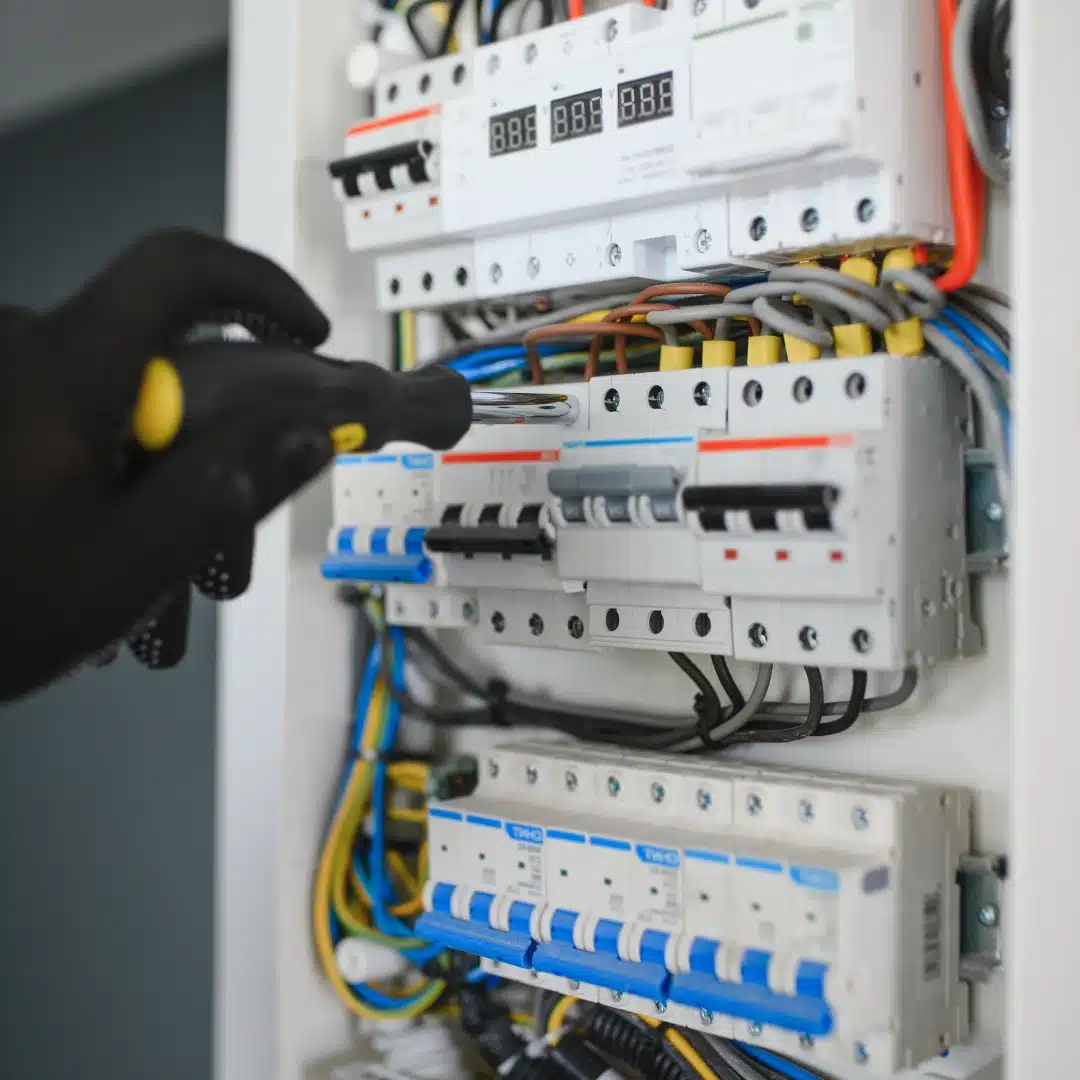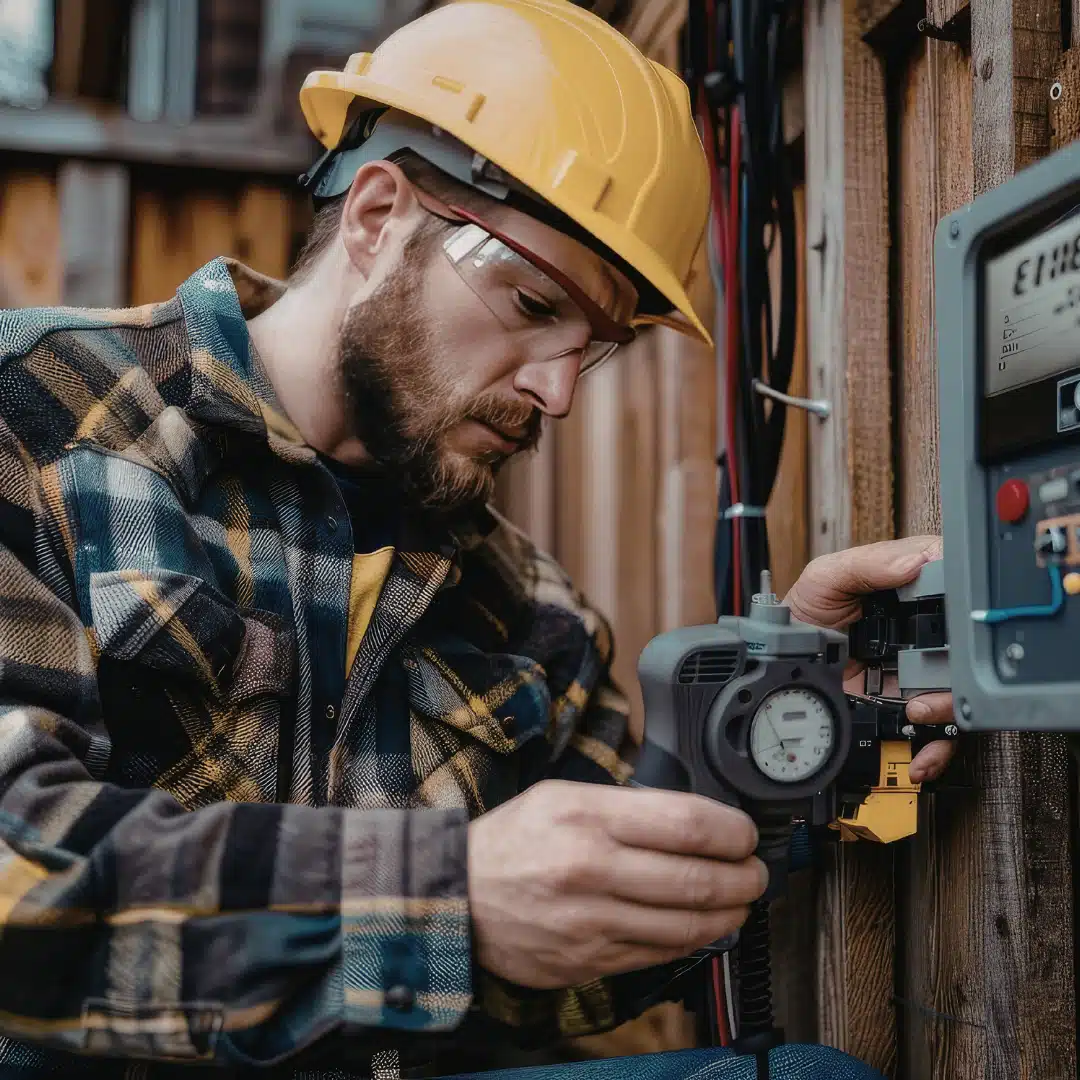

Residential electrical services safety standards are essential for protecting your home, family, and long-term investment—especially across the GTA. From permits and inspections to GFCI, AFCI, and grounding requirements, following modern electrical codes prevents fire hazards, insurance issues, and costly violations.
- Always hire certified, licensed electricians to guarantee that every installation and repair meets local codes and current National Electrical Code (NEC) standards.
- Obtain permits and schedule inspections for all major electrical work—unpermitted or DIY jobs risk insurance denial, legal violations, and unsafe living conditions.
- Insist on written documentation—permits, inspection certificates, and compliance records are essential for insurance claims, resale, and peace of mind.
- Install GFCI and AFCI protection throughout kitchens, bathrooms, laundry areas, and bedrooms to prevent shocks, fires, and costly code violations.
- Check for tamper-resistant outlets and proper grounding—these simple upgrades are now required by code and protect children and property from hidden hazards.
- Recognize common code violations such as improper breakers, insufficient outlets, or exposed outdoor wiring—these account for over 20% of failed inspections in the GTA.
- Stay updated with code changes and local amendments—consult your municipality or a trusted electrician before starting any upgrades to avoid expensive mistakes.
- Demand transparent, upfront estimates and clear communication from your contractor—Daliran Electric’s customer-first process ensures no hidden fees and total compliance.
Following these best practices will help you secure a safer, more valuable property while eliminating future risks and hassles. For deeper details and step-by-step guides, explore the full article to power your world with expertise.
Residential Electrical Services Safety Standards Explained
Imagine a single missed inspection costing you thousands in denied insurance—over 20% of homes across the GTA fail their first electrical safety check because of simple, often hidden code violations.
If you’re a homeowner or business owner, you know that electricity powers every corner of your life—but did you know that a minor shortcut in wiring or a forgotten permit can put your entire investment at risk?
Electrical safety standards aren’t just paperwork—they’re your family’s first line of defense against fire, shock, and costly future repairs. More than peace of mind, they’re legal requirements, enforced by inspectors who don’t overlook even the smallest details.
It’s easy to underestimate how quickly codes evolve—the National Electrical Code updates every three years, with the latest rules impacting kitchens, living spaces, and even your insurance eligibility.
Navigating these standards seems daunting, but when handled by certified professionals, you benefit from:
- Full code compliance for insurance, resale, and peace of mind
- Safe, reliable systems free from hidden hazards
- Documentation that protects your investment for years to come
Whether you’re planning a renovation, buying a new home, or just upgrading your lighting, knowing the basics of electrical codes and regulations is a must.
In the sections ahead, you’ll discover how today’s safety standards protect your property, what’s required room-by-room, and the key reasons why trusting licensed electricians is not just a smart move—it’s your best defense.
Ready to see exactly how up-to-date codes keep GTA homes and businesses powered safely? Let’s spotlight the safety standards every homeowner should know.
Understanding Residential Electrical Safety Standards
Electrical safety codes exist to protect lives, prevent fires, and ensure the reliability of every system powering your home.
Ignoring these standards isn’t just risky—it’s illegal and can void your insurance coverage or home resale value.
Every professional residential project in the U.S. and Canada is guided by the National Electrical Code (NEC/NFPA 70), which is the gold standard for keeping homes safe.
What the NEC Means for Your Home
The NEC—published by the National Fire Protection Association—gets updated every three years, with the 2023 edition shaping today’s best practices.
Staying current isn’t optional: insurance providers and inspectors check that repairs and upgrades follow the latest edition every time.
Picture this: a kitchen built to outdated code may lack required GFCI protection, putting your family and property at risk the moment you plug in an appliance.
Who Enforces the Rules?
Enforcement happens at several levels, making compliance a shared responsibility:
- NFPA writes the code, but it’s your local municipality or “authority having jurisdiction” that enforces it.
- City or township inspectors must sign off on major electrical work via permits and spot checks.
- Local governments can also introduce amendments and additions—meaning standards vary between neighborhoods.
A quick call to your local building department is the fastest way to check if there are extra requirements or new amendments.
Why Professional, Certified Help Is Non-Negotiable
For homeowners, the safest—and often only legal—choice is to hire certified electricians who are trained, licensed, and up-to-date on both the NEC and any local changes.
When you book with a certified professional:
- Your wiring and installations meet the latest codes.
- Permits and inspections are managed for you.
- You get documentation vital for insurance or resale.
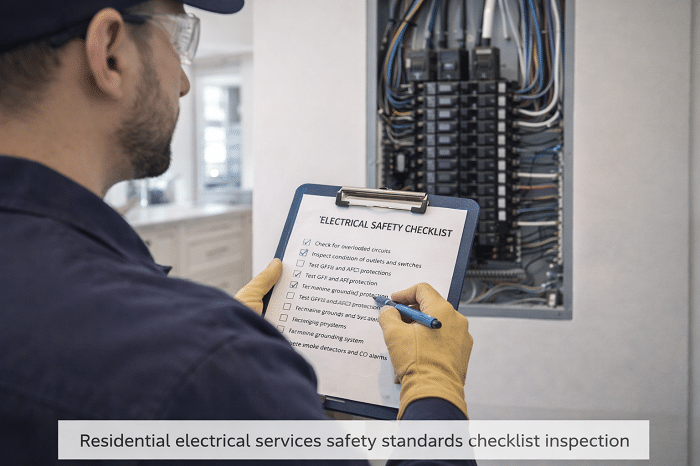
One careless shortcut can compromise your safety, break the law, and lead to costly fixes down the line.
Across Toronto and the GTA, Daliran Electric stands for honest, transparent service—so you don’t risk your family’s safety or your investment.
Understanding and following electrical safety standards is about peace of mind today—and protecting your property for years to come. If you remember one thing: up-to-date code compliance is the most important step in making your home truly safe.
Key Requirements in Residential Electrical Installations
Wiring, Circuits, and Protection Devices
A safe residential electrical system starts with using the right wire gauge for every circuit.
- 15-amp lighting circuits: Require 14-gauge copper wiring.
- 20-amp general circuits: Must use 12-gauge copper wiring to prevent overheating and fire risks.
Every new or updated home must have AFCI (Arc-Fault Circuit Interrupter) protection on all branch circuits. This technology stops dangerous arcing before it becomes a hazard—a real lifesaver in bedrooms, living areas, and more.
- GFCI (Ground Fault Circuit Interrupter) outlets: Required wherever water and electricity meet, such as kitchens, bathrooms, laundry rooms, garages, and all outdoor areas. Kitchens must have GFCIs for all countertop outlets and appliances, including dishwashers and disposals.
Canadian and US codes now demand tamper-resistant receptacles in nearly all locations accessible to children—only placements over 5.5 feet high get an exception.
Picture this: a family kitchen with GFCI outlets near every appliance, and tamper-resistant covers keeping curious little fingers safe.
“Choosing code-compliant outlets is the easiest way to prevent silent, everyday hazards.”
Grounding, Bonding, and Panel Safety
Proper grounding and bonding ensure excess voltage and fault currents are safely redirected, preventing shocks and fires.
- NEC Article 250 requires every panel, appliance, and conductive surface to connect to a grounding electrode (such as a ground rod or plate).
- Ground wires connect to each receptacle—plastic boxes require only the device to be grounded; metal boxes need both the device and enclosure grounded.
Routine inspection is crucial: check for secure ground connections and look for corroded or loose wires—common triggers for insurance claims and service calls.
“Grounding is your home’s invisible first line of defense against electrical accidents.”
Surge Protection and Emergency Disconnects
Whole-house surge protection at the main service panel is now a requirement for new installations or service upgrades. This vital step shields all appliances and electronics from brief but devastating voltage spikes, often caused by storms or utility issues.
- Emergency disconnects: Modern codes mandate outdoor, clearly labeled shut-offs for every home. Air conditioning disconnects must be secure (locked or tool-required) and signed for fast emergency access.
Think of outdoor disconnects as the electrical equivalent of a fire extinguisher: a simple, visible layer of protection that’s invaluable in a crisis.
“A labeled disconnect can make all the difference when seconds matter in an emergency.”
Homeowners who ensure code-compliance not only gain peace of mind—they protect their investment, maintain insurance coverage, and create a safer environment for everyone at home. Let these requirements guide your next project or electrical upgrade.
Room-by-Room: How Safety Codes Apply Throughout the Home
Kitchens
Picture this: a bustling kitchen, filled with appliances and activity—now imagine the electrical safety measures working behind the scenes.
To keep kitchens safe, safety codes require a minimum of eight circuits, with separate lines for lighting (15/20-amp) and at least two dedicated 20-amp circuits for small appliances.
All receptacles on the countertop must be both GFCI- and AFCI-protected, spaced no more than four feet apart.
Key appliances like dishwashers, garbage disposals, and refrigerators must each have their own properly-protected circuits, so you’re never left guessing about what’s powering your kitchen.
A single misstep—like skipping GFCI for a dishwasher—can lead to both code violations and insurance headaches.
—
Bathrooms and Laundry Rooms
Bathrooms require a dedicated 20-amp GFCI-protected circuit for every receptacle, which means power in the bathroom doesn’t feed any other room.
In laundry rooms, a 20-amp GFCI protects the washing machine, while electric dryers require a 30-amp, 240V outlet, also covered by GFCI rules.
Pro tip: It’s not just about outlets—any plug within six feet of water needs GFCI protection for real peace of mind.
“GFCI everywhere water flows—think showers, sinks, and machines” is a phrase every homeowner should remember.
—
Living Spaces, Bedrooms, and General Rooms
Hallways, living rooms, and bedrooms have their own set of rules for safe living.
- Receptacles must be installed every 12 feet or less along walls—no exceptions.
- Outlets are required on every 2-foot wall section wider than 24 inches.
- Garages get their own dedicated protection, too: a 20-amp GFCI circuit for all outlets, plus a separate lighting circuit.
- AFCI protection is required throughout, dramatically reducing fire risks in bedrooms and beyond.
Imagine never having to reach for an extension cord again—because every room already meets code!
—
Stairs, Hallways, and Closets
Safety codes demand smart lighting and outlet placement even in overlooked spaces.
- Stairways and hallways over 10 feet long require 3-way switches (top and bottom) for safe access in the dark.
- Extended hallways call for additional outlets, keeping devices charged and eliminating dangerous cords.
- For closets: LED or incandescent fixtures must be installed at least 12 inches from storage, or recessed to at least 6 inches—protecting you from heat and fire hazards.
Picture a closet light: Safe, cool, and worry-free—because every fixture meets today’s code.
—
Across your entire home, safety standards are designed to anticipate where risks appear in daily life. Checking for GFCI and AFCI labels, correct spacing, and dedicated circuits—especially in kitchens, bathrooms, and bedrooms—ensures your wiring matches proven, modern standards. Small details like light switch placement or closet fixture type make a big impact on both safety and convenience. When in doubt, check for labels, measure spacing, and always opt for a certified electrician to guarantee code compliance that protects your family and investment.
Compliance Best Practices for Homeowners
Staying safe and legal with your home’s electrical system starts with a single rule: always use licensed electricians for any installation, repair, or upgrade.
Skilled, certified professionals guarantee work that meets local codes—unlicensed or DIY attempts aren’t just unsafe, they’re illegal across most of Ontario.
Why Licenses Matter: The Risks You Can’t Ignore
Unlicensed electrical work exposes your family to shock hazards, fire risk, insurance denials, and failed resale inspections.
Picture this: an uncovered outdoor outlet—a small mistake—can void your insurance after a storm, or result in costly repairs when selling.
- Unsafe wiring dramatically increases fire risk (the Electrical Safety Authority reports over 400 residential electrical fires in Ontario annually).
- DIY installations or hiring unlicensed workers means no permits, no inspections, and potentially unsafe homes.
“A single shortcut today can cost you thousands down the road.”
Permits, Inspections, and Your Rights as a Homeowner
Every significant electrical project in the GTA requires a permit, followed by an inspection from the Electrical Safety Authority (ESA) or your local municipality.
Here’s how it typically works:
- Hire a licensed electrical contractor—they apply for permits on your behalf.
- Schedule an inspection—required before new wiring is hidden or closed in.
- Receive a Certificate of Inspection—your proof of compliance and a requirement for insurance and selling.
- Ontario homeowners are legally responsible for ensuring all electrical work is inspected.
- Unsigned or missing documentation may put your insurance in jeopardy.
Documentation: Protecting Your Investment
Keep every permit and inspection certificate—these are your guarantees of a safe, compliant installation.
When remodeling, preparing for an insurance claim, or listing your property, you’ll need to show:
- Certificates for completed work
- Proof of local code compliance—especially if your municipality has stricter rules than the NEC
Buyers and adjusters look for these documents; lack of paperwork can knock thousands off your home’s value.
The Essentials: How to Guarantee Code Compliance
Follow these immediate steps for safety and peace of mind:
- Always hire an ESA-licensed electrician—check their credentials before work begins.
- Confirm permit applications with your contractor, and keep copies.
- Attend final inspections or review the Certificate of Inspection yourself.
- Verify local amendments—city rules sometimes go beyond the National Electrical Code (NEC).
- Maintain a permanent file of all paperwork, ready for insurance or resale needs.
“Think of a permit as your home’s shield against fires, fines, and future headaches.”
Hiring right, staying documented, and insisting on permits aren’t just best practices—they’re your frontline defenses for a safer, more valuable home. When in doubt, protect your assets: insist on proof of compliance every time.
Most Common Code Violations and How to Avoid Them
Staying code-compliant in your home isn’t just about following rules—it’s about safeguarding your family and property every day. Even a single overlooked detail can pose a serious safety risk or lead to denied insurance claims.
Top Residential Electrical Code Violations
Watch for these frequent issues homeowners encounter:
- Incorrect circuit breakers: Using the wrong amperage can overload wiring, increasing fire risk.
- Poor grounding or bonding: Without proper connections, metal parts may become shock hazards.
- Inadequate number of outlets: If outlets are too far apart (>12 feet), you might rely on unsafe, daisy-chained extension cords.
- Uncovered outdoor outlets: Missing or broken weatherproof covers expose connections to moisture, increasing risk of electrocution.
- Extension cord overuse: Extension cords aren’t meant for permanent wiring and can overheat or spark fires.
- Improper junction box use: If wire connections aren’t fully enclosed, exposed wiring can be a hidden hazard.
These mistakes are found in over 20% of homes during inspections in the GTA, according to recent municipal reports.
Warning Signs of Non-Compliance
Homeowners often overlook these instantly recognizable visuals:
- Loose, discolored, or “buzzing” outlets
- Outdoor outlets without protective covers
- Warm or sparking switches
- Wires spliced outside of junction boxes
- Excess extension cords across baseboards
Every one of these signs can point to a potential code violation or immediate safety risk.
The True Impact: Safety, Insurance, and Property Value
Skipping code compliance doesn’t just endanger your loved ones—it can:
- Void your home insurance or block claim payouts after a fire
- Devalue your home during sale if the inspector discovers uncorrected violations
- Lead to expensive emergency repairs, or even fines, after an incident
Picture this: An improperly installed breaker fails, causing a power surge that fries your appliances—and your insurance won’t cover the damage because of code violations.
Choosing a licensed electrician and requesting an inspection after major work are two of the most effective ways to protect your family and investment. Quick visual checks and asking for code documentation bring peace of mind and legal compliance—ensuring your home is both safe and market-ready.
Staying Up-to-Date: Changes in Codes, Local Amendments, and Ongoing Safety
Staying current with residential electrical codes isn’t just smart—it’s required. The National Electrical Code (NEC) is updated every three years, with the most recent edition released in 2023.
For homeowners in the GTA, these updates can mean new safety rules, product requirements, or even changes to which features insurance will cover. Picture this: a recent kitchen remodel fails an inspection because code changes added new GFCI requirements to appliance outlets.
Navigating Local Amendments & Ongoing Updates
It’s not just about the national code—the City of Toronto and Ontario often amend the NEC to fit local needs. What’s legal across the border may need tweaks locally.
Always check with your municipal building department or a licensed electrician before starting electrical upgrades or renovations. Here’s how to stay informed:
- Monitor local government websites for published code amendments
- Consult trusted professional directories to find licensed electricians who stay updated
- Request written confirmation of code compliance during quoting and inspection phases
“Electrical codes aren’t suggestions—they’re your best defense against hazards and future legal headaches.”
Value of Routine Inspections and Compliance Checks
Regular, professional electrical inspections are strongly recommended—especially:
- Every 5-7 years, or
- Before major renovations, additions, or home purchases
A certified electrician can spot subtle risks or outdated wiring that a DIY eye might miss. More than 25% of residential electrical fires stem from outdated or non-compliant systems—a reminder that “what you can’t see can still cost you dearly.”
Accessing Up-to-Date Resources
For quick reference and peace of mind:
- Visit the Electrical Safety Authority of Ontario for the latest bulletins
- Download the current NEC/NFPA 70 from NFPA’s website
- Ask for code update briefings during annual electrical service appointments
Quick Action Steps for Homeowners
Before you buy, remodel, or add a circuit:
- Verify all work complies with current codes and local amendments
- Obtain permits and schedule official inspections
- Ask your electrician for documentation—your next buyer (or insurer) will expect it
Staying updated with codes protects your family, investment, and peace of mind. Electrical safety standards aren’t static—think of them as the smartphone updates of your home, always improving with each new edition.
Working with Certified Electricians: Ensuring Code-Compliant and Safe Installations
Choosing a certified electrician in the GTA isn’t just about getting the job done—it’s about keeping your family, home, or business safe and compliant year after year.
Hiring a professional means every installation meets the latest National Electrical Code (NEC) standards and all local amendments.
Homeowners and business owners should prioritize these credentials before any project:
- Valid electrician’s license in Ontario (ECRA/ESA certification)
- Up-to-date insurance for liability and property protection
- A strong local reputation and positive, verifiable reviews
- Commitment to continuing education, ensuring knowledge of the latest codes and technology
Why Transparency and Guarantees Matter
When you request electrical services, expect transparent estimates that detail labor, materials, and code compliance measures.
Look for electricians who provide:
- Written guarantees of code compliance on all work
- Precise project timelines and clear explanations of each phase
- Documentation—crucial for insurance, resale, and peace of mind
“Hiring licensed pros isn’t just paperwork—it’s your front line of defense against costly violations and electrical hazards.”
Daliran Electric’s Customer-First Process
Daliran Electric stands out by making safety and compliance visible at every step.
Picture this: a team arrives in uniform, walking you through your options, showing certifications, and explaining code requirements in clear terms—no jargon.
You’ll receive:
- Upfront project estimates with no surprise fees
- Support with all required permits and inspections from day one
- Proactive updates so you always know the next step
- Dedicated customer service before, during, and after installation
What Happens Behind the Scenes
Certified electricians manage everything:
- File permits with your municipality, ensuring approved work
- Coordinate inspections at each important milestone
- Document code compliance for your records (and future buyers)
These steps mean you never risk a failed inspection, denied insurance claim, or future safety issue.
To guarantee long-term safety, always choose certified, insured electricians who provide clear estimates and handle permits and inspections—because your peace of mind is worth protecting.
Conclusion
Your commitment to electrical safety isn’t just a legal responsibility—it’s how you protect your family, your investment, and your peace of mind.
By understanding and applying modern safety standards, you lay the groundwork for a home that’s not only comfortable but truly secure.
—
Here are the essential, actionable steps you can take right now:
- Always hire a certified, ESA-licensed electrician for any installation, repair, or upgrade—never settle for unlicensed work.
- Insist on clear documentation—keep permits and inspection certificates as lifelong records of compliance and value.
- Verify code compliance before, during, and after each project, especially for kitchens, bathrooms, and major system changes.
- Schedule regular electrical inspections—especially before listing, remodeling, or after purchasing an older home.
- Consult your local building department or trusted professionals when in doubt about code updates or unique local amendments.
—
Ready to act?
- Contact Daliran Electric for a free consultation—our experts guide you through every requirement with transparency and care.
- Start your compliance file today—gather all permits and inspection records in one safe place.
- Walk your home room by room—look for GFCI/AFCI labels, adequate outlet spacing, and any visible hazards, then ask the pros to address any concerns.
—
Your diligence today creates a safer, smarter home tomorrow—one that stands the test of time, protects your loved ones, and preserves your investment at every turn.
When every connection is backed by expertise and integrity, you’re not just following codes—you’re powering a future you can trust.
For safe and code-compliant wiring, always trust certified professionals. Learn more about Residential Electrical Services in Toronto to protect your home and family.
Electrical Safety Authority of Ontario (ESA)
FAQ
Q1: Why are residential electrical services safety standards mandatory in Ontario?
Because they prevent fires, electrical shocks, failed inspections, and insurance claim denials while ensuring legal compliance.
Q2: Who enforces residential electrical services safety standards in the GTA?
The Electrical Safety Authority (ESA) and local municipalities enforce inspections, permits, and compliance.
Q3: Do older homes need to meet modern residential electrical safety standards?
Yes—any upgrades or renovations must comply with current codes, even in older properties.